
.png)
 Table of Contents
  Download as PDF
 Share
Share
Fireworks can be exciting, but for some children with autism, the combination of loud noises, bright flashes, crowds, and unpredictability can feel overwhelming. Sensory sensitivities vary from child to child, so the best approach is to prepare in advance and follow your child’s individual comfort level.
With thoughtful planning, familiar sensory supports, and a flexible exit plan, families can make fireworks celebrations more manageable. And if your child would rather skip the fireworks altogether, that is completely okay too.
Knowing what to expect can make an unfamiliar experience feel more predictable.
Before the event, talk with your child about what fireworks may look and sound like. You can explain that there may be bright flashes, sudden loud noises, crowds, and periods of waiting between fireworks.
Pictures, short videos, visual schedules, or a simple social story may help your child understand what will happen. Let them know where you are going, how long you expect to stay, and what they can do if they need a break.
Families looking for more practical ways to prepare children for unfamiliar situations can also explore our parent resources.
A large fireworks event does not have to be the first experience.
If your child is interested in fireworks but sensitive to noise or crowds, consider watching a smaller display, viewing from farther away, or choosing a location where the sound is less intense.
Some families may prefer watching fireworks from home, from inside a vehicle, or from another familiar setting. Starting with a shorter or quieter experience can also help you learn what feels comfortable for your child.
The goal is not to make your child tolerate a particular event. It is to find an experience that works for them.
Think about the environment before deciding where to watch the fireworks.
A location with more personal space, fewer crowds, and easy access to a quieter area may help reduce sensory demands. Bring familiar items your child already uses for comfort or regulation, such as a favorite toy, blanket, fidget item, preferred snack, or communication support.
If possible, identify a calm place nearby where your child can step away from the activity.
Children who receive individualized ABA therapy services in New Jersey may also practice coping, communication, transition, or daily living skills as part of goals that are appropriate for their individual treatment plan.
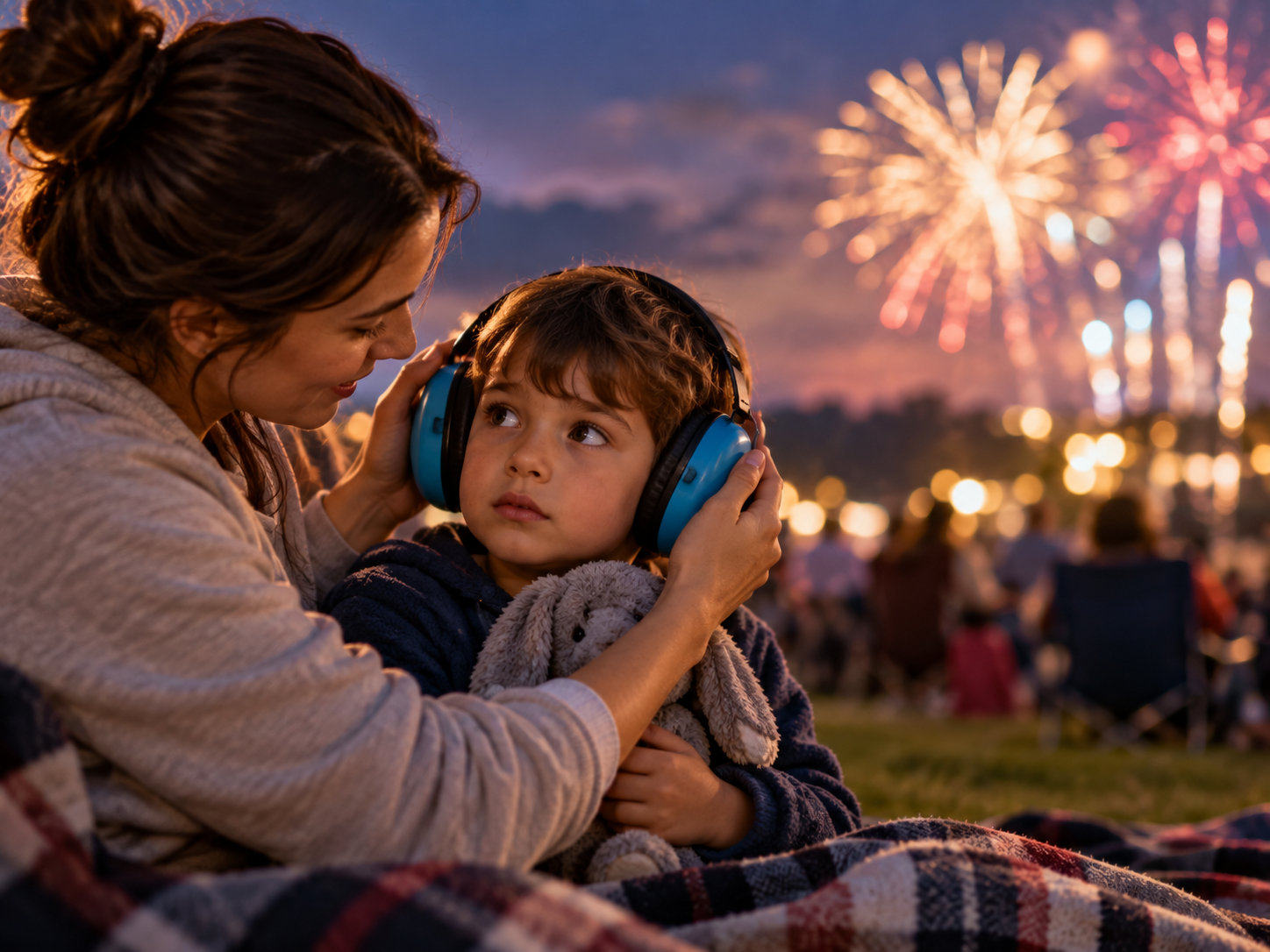
For children who are sensitive to loud sounds, hearing protection may make fireworks more comfortable.
Child-sized earmuffs or hearing-protection headphones can help reduce the intensity of sudden noises. If your child has not used them before, consider introducing them ahead of time in a familiar environment rather than for the first time during the event.
It is also important to remember that hearing protection will not be comfortable for every child. Follow your child’s preferences and use supports that are already familiar whenever possible.
During fireworks, familiar strategies are often more helpful than introducing something completely new.
Depending on your child’s preferences, calming strategies may include:
Watch your child’s cues and give them time to regulate. What works for one child may not work for another, so focus on strategies your child already knows and responds to well.
Even with careful preparation, your child may decide that the event is too much.
Choose a viewing location that makes it easy to leave. Know where your vehicle is parked, keep important belongings easy to reach, and avoid placing yourself in an area where exiting will be difficult.
Before the event, let your child know that taking a break or leaving early is always an option.
Having an exit plan can reduce pressure on everyone and make it easier to respond calmly if your child becomes uncomfortable.
Fireworks should only be handled by responsible adults and trained professionals.
Teach children not to touch, pick up, or approach fireworks or firework debris. Maintain appropriate supervision during public displays and follow all safety instructions provided by the event organizers.
Keep safety explanations simple and appropriate for your child’s level of understanding.
Families with questions about ABA services, eligibility, or support can also visit our ABA therapy FAQ.
A successful celebration does not have to mean sitting through an entire fireworks display.
Your child may enjoy watching for a few minutes, seeing the colors from a distance, viewing fireworks through a window, watching a video at home, or choosing a completely different activity.
Follow your child’s interests and comfort level. If they want to leave, take a break, or skip the fireworks, respecting that choice can help keep the experience positive.
The most important part of the celebration is spending time together in a way that feels safe and comfortable for your family.
ABA360 provides individualized, BCBA-supervised ABA therapy for children with autism across New Jersey. We work with families to support meaningful goals related to communication, emotional and behavioral regulation, daily living skills, and independence.
Copyright ©2026 aba360.com. All rights reserved | Privacy Policy